

Artificial intelligence is shaping the future of enterprise business — but it’s the people behind the AI who truly define its impact. At Uniphore, women across AI science, engineering, and research are helping build the systems that power smarter decisions, and innovation at scale.
In this Q&A, we spotlight the perspectives, experiences, and insights of the women driving AI forward — and explore what it takes to turn advanced research into meaningful enterprise outcomes.
Get to know Mercedes Garcia Martinez, Manpreet Kaur, Jeena Prakash, Rini Sharon, and Sanjari Srivastava.
Mercedes Garcia Martinez, Manager | AI Science

- What inspired you to pursue a career in AI science, and who influenced your journey?
My passion for science, mathematics, and computers goes back to childhood. My family played a huge role. My father was a true math enthusiast who made me see the beauty in numbers and logic from a very young age. And my older siblings gave me early access to computers and the internet at a time when very few people had it, which felt like having a window to the future. That combination — a love for abstraction and early hands-on exposure to technology — set me on this path almost inevitably.
- As a woman in AI, what perspectives do you think are essential in shaping responsible technology?
Women remain a minority in technology, and that gap matters more than people realize — not just for fairness, but for the quality of what we build. AI systems reflect the perspectives of the people who design them. When those teams lack diversity, the technology inherits those blind spots. Bringing more women into the field means building systems that work better for everyone. Beyond that, I think women often bring a strong focus on impact, collaboration, and real-world consequences that is genuinely valuable in responsible AI development. That is why I feel strongly about inspiring girls to pursue STEM from an early age — it is an investment in better technology for society as a whole.
- What excites you most about the future of AI in the enterprise?
What excites me most is the shift from AI as a standalone tool to AI that is genuinely embedded in how organizations work — through agents that can reason, plan, and act across complex workflows. We are moving from systems that answer questions to systems that get things done. For enterprises, that is transformative to automate not just repetitive tasks but genuinely complex decision-making processes, while keeping humans in the loop where it matters.
- What’s one piece of advice you would give to your younger self?
Trust yourself — even when a professor makes you feel like you do not belong, or when imposter syndrome whispers that you are not good enough.
- What are you working on right now that you’re excited about?
Right now, I am focused on two things that I find genuinely exciting. The first is agent evaluation — designing robust frameworks to assess how well AI agents perform in real, complex scenarios. The second is hiring new AI scientists for our Valencia office — seeing the team grow, person by person, is one of the most rewarding things I have been part of professionally.
Manpreet Kaur, Staff AI Scientist
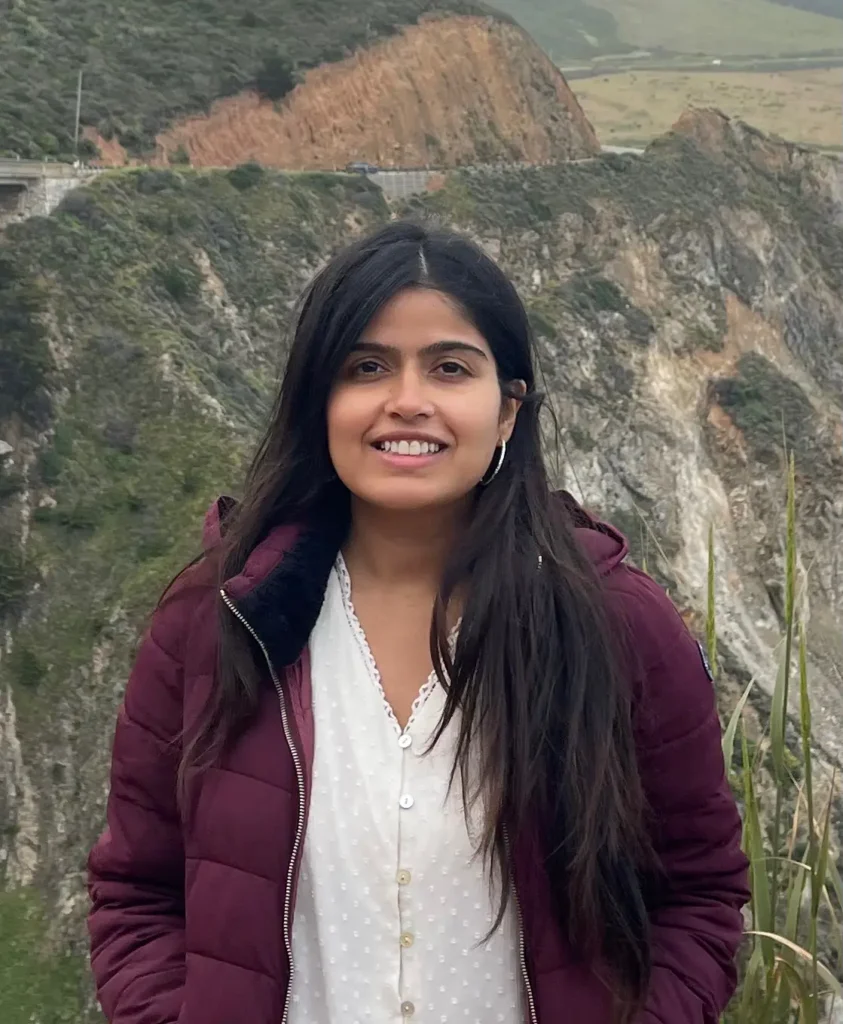
- What inspired you to pursue a career in AI science, and who influenced your journey?
I’ve loved math since school and college, and I always knew I wanted a career that sits at the intersection of pure science and real-world engineering. AI felt like the perfect fit — it blends systems engineering with deep mathematical and statistical thinking, and it gives you a way to turn theory into something tangible. I started learning AI/ML on my own, and I worked through two publicly available lecture series in early days of deep learning — Andrew Ng’s machine learning course and Andrej Karpathy’s computer vision lectures, which made the field feel both intellectually rigorous and incredibly exciting to build in. In my last year of undergraduate studies, I realized this was what I wanted to do long-term and decided to pursue AI science as my career.
- As a woman in AI, what perspectives do you think are essential in shaping responsible technology?
In my previous role, I worked on human-centric AI for a consumer electronics device, and that experience reinforced how important it is to build technology with diverse users in mind from day one. As a woman of color, I’m especially aware that “works well on average” isn’t good enough for consumer devices. Responsible AI means making sure under-represented groups are fairly represented in training data and evaluation, so AI features work reliably and seamlessly for everyone.
In the LLM era, that responsibility extends to safety as well. I care deeply about building models and agent systems that behave safely in the real world, and I believe the best way to get there is through rigorous quality analysis, careful testing, and clear guardrails.
- How do you approach AI development to meet real business outcomes?
To drive real business outcomes, I focus on making AI systems reliable and predictable. That’s not always easy because AI is inherently probabilistic, but you can still design the system to reduce variability by using tight prompts, clear constraints, strong evals, and good fallbacks. When the behavior is consistent, customers trust it and adoption goes up.
I also think business-driven AI isn’t just about building the model, it’s about making it understandable for customers. I try to be clear about what the system can and can’t do, where it’s strong, and how to use it effectively, so people get real value from it instead of surprises.
- What excites you most about the future of AI in the enterprise?
What excites me most is agentic AI — the shift from AI that answers questions to AI that can actually get work done. Enterprise workflows are long and messy, containing lots of steps, tools, handoffs, and edge cases. That’s exactly where agents fit best, because they can follow a process end-to-end instead of stopping at a suggestion. Building them to be reliable and measurable, brings huge impact in the enterprise world.
- What’s one piece of advice you would give to your younger self?
Play the long game. I’d tell my younger self to optimize for compounding progress: pick a specific field, go deep, and iterate with discipline. Focus on quality over quantity. Depth builds the strongest foundation and everything else gets easier from there.
- What are you working on right now that you’re excited about?
Right now, our research team is building services that automate different parts of the machine learning lifecycle. It might sound like we’re trying to automate our own jobs, but working on this has been a really honest way to see what today’s AI systems are good at and where they still fall short. I’m excited to keep pushing on these tools because they make parts of our work less manual, make us a lot more efficient, and let us focus on the higher-value problems.
Jeena J Prakash, Staff AI Scientist

- What inspired you to pursue a career in AI science, and who influenced your journey?
I’ve loved mathematics and solving puzzles since childhood. I was always curious about how our brain finds solutions — whether while solving a problem or responding to real-life situations. To me, AI mirrors that same process of reasoning and decision-making. I decided to pursue AI during my post-graduation when I witnessed Prof. Hema A Murthy, my mentor, and her team enabling machines to synthesize human speech. Seeing a machine generate something so inherently human was transformative for me. In that moment, AI shifted from being an abstract concept to a powerful tool capable of shaping how humans and technology interact.
- As a woman in AI, what perspectives do you think are essential in shaping responsible technology?
As a woman in AI, I believe responsible technology must begin with safety, inclusive data representation, and strong bias awareness. The systems we build reflect the data and assumptions behind them, so we must consciously design to avoid exclusion. AI should be user-centered — it should empower people, not intimidate or marginalize them. Beyond accuracy metrics, we must think about long-term societal impact, ensuring trust, accessibility, and fairness remain at the core of innovation.
- How do you approach AI development to meet real business outcomes?
I always start with the business objective — not the model. In enterprise AI, success isn’t just about lowering word error rate or improving benchmark scores; it’s about reducing operational costs, improving customer experience, enabling reliable automation, and scaling across languages and domains. I begin by clearly defining the measurable key performance indicators, then build a strong data strategy, evaluate suitable models, and design the right architecture based on latency and deployment constraints. Finally, I rely on iterative deployment, A/B testing, and strongly emphasize continuous monitoring and feedback loops to ensure the system remains reliable, scalable, and aligned with evolving business needs. In enterprise settings, engineering rigor and disciplined experimentation are just as critical as research innovation.
- What excites you most about the future of AI in the enterprise?
What excites me most is the journey toward truly production-grade, agentic AI systems in the enterprise. While today’s systems combining Speech AI, LLMs, and retrieval are powerful, they are still evolving and cannot fully replace human intelligence. The exciting part is the path ahead — building reliable, real-time, voice-interactive systems that can reason and act within business workflows. I’m particularly curious about what will enable this leap: deeper engineering breakthroughs, new algorithmic innovations, or a combination of both.
- What’s one piece of advice you would give to your younger self?
I would tell my younger self to focus less on proving and more on mastering the fundamentals. Deep technical confidence comes from understanding systems end-to-end from underlying math to real-world deployment. Growth becomes more meaningful when we build depth instead of rushing. And most importantly, never hesitate to ask questions — curiosity compounds far faster than confidence.
- What are you working on right now that you’re excited about?
Building production-grade automatic speech recognition systems for real-world applications across multiple languages is something I find very exciting, especially the challenge of reducing latency for truly real-time interactions. Designing systems that are both robust and scalable while maintaining speed and accuracy is a key focus. Even more exciting is the exploration of Speech LLMs multimodal systems that combine speech and language understanding. These systems have the potential to enable truly interactive, intelligent voice experiences.
Rini Sharon, Staff AI Scientist

- What inspired you to pursue a career in AI science, and who influenced your journey?
They say nothing in this world is an accident, but I’d say my career in AI started by accident. I applied for my master’s in signal processing with no grand plan. But then, I came across a project about converting thoughts into speech. The idea that a machine could figure out what you’re thinking without you saying a word? To me, that was not science, it was science fiction!
That project became my entry point into data science and AI. We built brain computer interfaces that could genuinely change lives for the better. I watched a young autistic boy use an older communication device, where each letter would flash on the screen, and he would tap once to select it, twice to delete, slowly building one word at a time. It took him about a minute just to get a single sentence out. With the newer protocols that bought the latency down, that same boy could communicate what he wanted within seconds. The look on his face! I will never forget it. I call that moment and that boy as the ones that “influenced” my AI journey and made me understand the kind of difference AI can make in someone’s life. I’ve been chasing that feeling in my work ever since.
- As a woman in AI, what perspectives do you think are essential in shaping responsible technology?
I’m a firm believer that women can do anything and everything they set their mind to. They bring perspectives shaped by very different life experiences, and those perspectives are essential in AI too. When women are part of the teams building these systems, we naturally ask different questions. Who is this working for? Who might it not work for? What are we missing? Not because we’re looking for problems, but because our experiences give us a wider lens. And in AI, a wider lens means a better product!
- How do you approach AI development to meet real business outcomes?
Customer first. Always. Every piece of AI we build starts with one question. What is the actual problem our customer is facing? Not what is trending in research, or what looks impressive in a demo, rather, What’s the real pain point?
From there, I work backwards. You take the problem, break it down into smaller, manageable pieces, and figure out what already exists, what can be solved quickly, and what needs a longer runway.
- What excites you most about the future of AI in the enterprise?
The unlimited potential. And I don’t say that lightly. The first time I used ChatGPT, I was genuinely blown away. Back in 2020, if someone had told me that within two years we’d be working with systems of this scale and capability, I would have politely suggested they get some sleep. And yet, here we are.
That pace of change is what excites me most about AI in the enterprise. The problems it can solve, the mental load it can lift. We’re only scratching the surface. What enterprises will be able to do with AI three years from now is probably something none of us can fully picture today. And that according to me is the “best part”.
- What’s one piece of advice you would give to your younger self?
Two things. First, the practical one. Build your skills with the future in mind. If I’d known generative AI was coming, I would have prepared differently. Spent less time on manual work and more time building the kind of thinking that lets you ride a technological wave instead of getting caught off guard by it.
And second, the advice I actually needed to hear. Stop worrying so much about the future. You genuinely cannot predict it. The unknowns are wild, and mostly in the best possible way. Live in the moment, enjoy where you are, and trust that the future has some truly amazing things in store. Because it does.
- What are you working on right now that you’re excited about?
Voice. That’s the short answer and the long answer.
A few years ago, the future was large language models. Once that future arrived, the next chapter is going to be “voice”.
Think about it. Instead of typing, texting, or searching, you just speak. Because voice is the most natural and easiest form of human interaction.
Right now, I’m working on making voice AI intelligent, and that means solving some beautifully hard problems. How do you teach a machine to handle turn-taking as well as a human can? How do you have a responsive system that knows when to wait and when to talk? And much more.
The goal is to build Voice AI that doesn’t just function, but feels human. We’re not there yet, but we’re getting closer.
Sanjari Srivastava, Senior Staff AI Scientist
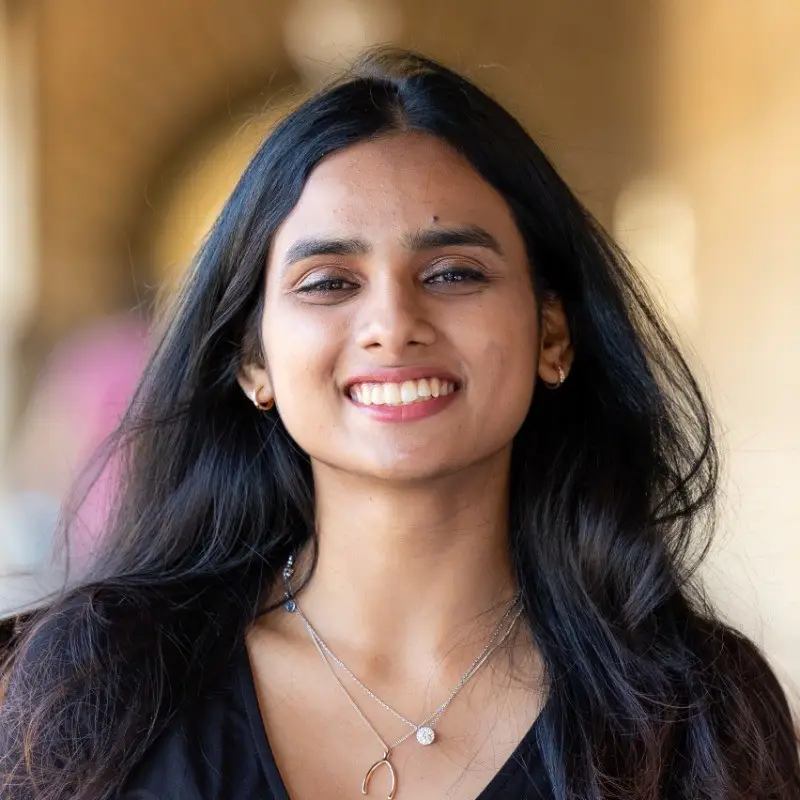
- What inspired you to pursue a career in AI science, and who influenced your journey?
I’ve always been interested in solving logical problems. I am lazy by nature and learning about math and science always gave me the most bang for my buck by keeping my mind engaged irrespective of which physical location I was confined in (school/home/a boring party). As I picked up Computer Science, I learned about amazing algorithms, which were beautiful in their simplicity and had immense applications. Backprop was a similar algorithm I learned in my undergrad, and this laid the foundation for my initial interest in the field. Since my undergrad studies, the field has been growing year by year and I am pursuing a career in it for the sheer excitement and innovation the field has these days. It remains a beautiful set of algorithms for me. Stories of Indian physicists like CV Raman, Kalam and Vikram Sarabhai are the earliest sources of inspiration for me that got me interested in math and science. As a teenager, stories of cool technologies being built in Silicon Valley garages and Harvard dorms also excited me a lot and motivated me to pursue Computer Science. Due to these influences, I try to keep in mind that our work pushes the frontier for what’s possible for humanity and that makes me want to innovate every day.
- As a woman in AI, what perspectives do you think are essential in shaping responsible technology?
As a woman of color in AI, I was very motivated to research bias and fairness in AI systems; not just as an academic interest, but because I’ve seen how these models can reflect and reinforce the blind spots of those who build them. Diverse perspectives on the table aren’t a good to have; they are a technical necessity. AI provides us a level playing field, enabling women globally to self-educate, launch businesses, and drive innovation in ways that were previously out of reach. But that same reach is what makes accountability so critical. A tool adopted at this scale doesn’t just reflect societal norms; it actively shapes them. The models we build today will influence how the next generation understands fairness, opportunity, and who belongs in which roles. That’s why I believe responsible AI requires intentionality at every layer — from training data and model evaluation to product decisions and policy.
- How do you approach AI development to meet real business outcomes?
Understanding the business problem is the first step to driving real business value. There exists a disconnect between what AI benchmarks measure today and real business tasks. Thus, creating internal evaluations which closely mimic the business ask is the crucial first step in AI development. I also try to account for cost, usability, and data security for AI being used by enterprise customers, which looks quite different from the requirements of Silicon Valley AI power-users.
- What excites you most about the future of AI in the enterprise?
The most exciting thing to me is how it will fundamentally revamp how we view components of computer systems like code, operating systems, the communication modality between human-computers etc. Enterprises will have to reimagine their tech stacks to fully benefit from AI.
- What are you working on right now that you’re excited about?
The research team has some interesting ideas for pushing the boundaries of research on agents, model training algorithms like RLVR and diffusion, dataset generation, determining evaluation quality, amongst many other things. I am excited for what we will create in the coming months.