Emotional intelligence (often abbreviated EQ or EI) is the ability to recognize and manage our emotions in a healthy and positive way. The term “emotional intelligence” was popularized by the renowned psychologist Daniel Goleman in his groundbreaking 1995 book, Emotional Intelligence: Why It Can Matter More Than IQ. Since then, the term and its four supporting “domains” have served as a guide for executive leaders, sales professionals, and others seeking to develop their interpersonal skills, particularly within the workplace.
The most effective leaders are all alike in one crucial way: They all have a high degree of what has come to be known as emotional intelligence. It’s not that IQ and technical skills are irrelevant. They do matter, but…they are the entry-level requirements for executive positions.
– David Goleman
Source: Harvard Business Review
What are the four domains of emotional intelligence?
The four domains of emotional intelligence are self-awareness, self-management, social awareness, and relationship management. This concept refers to the ability to understand emotions in yourself and others and use that understanding to choose actions that improve your relationships.
While ultimately, it’s up to people to choose actions that positively impact relationships, recent developments in artificial intelligence are helping to shoulder the cognitive burden. Emotionally intelligent AI—known as emotion AI—has grown exponentially more sophisticated in recent years. Using a combination of machine learning, natural language processing (NLP), computer vision, and speech recognition technologies, emotion AI can analyze facial expressions, voice tones, text, and body language for emotional intelligence insights. Business professionals, from sellers to customer service reps, can use these AI-generated insights to create more positive interpersonal interactions—a critical advantage in an increasingly digital (and emotionally disrupted) world.
In the following article, EQ expert and business consultant Dave Seaton explains the four domains of emotional intelligence in detail. We’ll also discuss how AI is impacting each domain, enabling people to become more emotionally intelligent in their professional interactions and decision-making.
Watch this video for a quick overview:
Self Awareness
Only 36% of people*
could understand their emotions in the moment as they are happening
*tested by TalentSmart EQ research
Self-Awareness is understanding your own emotions in the moment as they are happening. It sounds simple, yet the TalentSmart EQ research found that only 36% of the people they tested could do it.
Imagine you’re traveling to an important meeting and your flight is delayed. You sit at the airport, watching the clock as you visualize in growing detail the embarrassment of being late. What will your boss say when you walk into the meeting? Should you stroll to the front of the room and crack a joke, or slip in the back and hide? Should you just skip the entire trip and tell everyone you were abducted by aliens and forced to eat Fruit Loops while watching endless reruns of I Love Lucy?
If you’re self-aware, your rational brain interrupts this panic-spiral of doom. “Hello, anxiety!” it says in a cheery voice. “You’re feeling anxious because this weather delay is really messing with your emotional need for control.” The brain’s logic center, the prefrontal cortex, fires up as you label your emotion and the trigger that produced it. And with this awareness, you have an opportunity to practice the second domain: Self-Management.
How AI Helps
While AI may not be able to diffuse your preflight tensions, it can sharpen your sense of self-awareness when it counts: during the actual meeting. Meeting software that uses emotion AI techniques, such as sentiment analysis and computer vision, can provide you with real-time feedback based on your emotional cues. Is your anxiety derailing your sales pitch? AI-enabled programs, like Uniphore’s Sales Interaction Agent, can help you identify emotional triggers and get your presentation back on track.
Self Management
When you are aware that you’ve been emotionally triggered, Self-Management is choosing your reasoned response to the emotion rather than reacting.
After finding out about the flight delay, you take a few deep breaths to slow your heart rate. You remind yourself that weather delays mess up the whole airline system, likely affecting others. You call your boss and let him know about the situation. You decide not to chug two beers and yell at the gate agent.
We often focus on managing “negative” emotions, like anger and fear. But don’t be fooled by a good mood, either! When you’re elated because you just won a fortune at the roulette table, it’s probably smart to wait a few days before rushing off to the Elvis Wedding Chapel with your new friend Destiny.
How AI Helps
Emotion AI can do more than just identify emotional cues like fear or excitement. It can also measure your responses. For example, after coming to grips with your travel ordeal, you may choose to make light of the situation to break the ice at the meeting. By measuring your vocal cues and body language, emotion AI can ensure your responses are rational and not emotionally driven. It can also gauge how you’re coming off to your audience (more on that next). Together, these insights can help you manage your emotions and adjust your presentation as needed.
Social Awareness
While Self-Awareness is being aware of your own emotions, Social Awareness is being aware of others’ emotions in the moment they happen. Using empathy, you understand what another person is feeling and why. Listening and observing are key. Often, we must stop talking and acting so we can learn how others are feeling.
Imagine you’re the boss in our flight delay scenario, and you get the call from a key employee explaining they’ll be late. If you’re socially aware, you pick up on the emotional clues that your employee is anxious—not just about missing the meeting, but about your reaction to the situation. You understand that people may fear your reaction to bad news because you’re in a position of authority, especially if you’ve blown up before. (It’s ok, we’ve all done it).
How AI Helps
Social awareness is where emotion AI shines. With more and more interactions happening remotely or as a partly in-person, partly remote hybrid, it has become more difficult for team members to “read the room.” Emotionally intelligent AI agents, can supplement this weakened skill with real-time, AI-generated insights. Are prospects losing interest and tuning out? Are customer service callers getting frustrated? Emotion AI can flag signs of disengagement and frustration, enabling remote enterprise employees to change tact on the fly.
Relationship Management
Building upon the other three, Relationship Management means using Self-Awareness, Self-Management and Social Awareness to manage interactions with others and choose actions that resolve conflict and cultivate long-term relationships.
You choose to back down from an argument, even when you know you’re right, because you value the long-term relationship over the short-term victory. You choose to coach an employee, rather than criticize their failure, recognizing the future impact of their engagement and contributions.
When you get the call from your flight-delayed employee, you don’t just address the business need of who will cover the meeting. You also meet their emotional needs, reassuring them that there won’t be any professional fallout from the situation.
How AI Helps
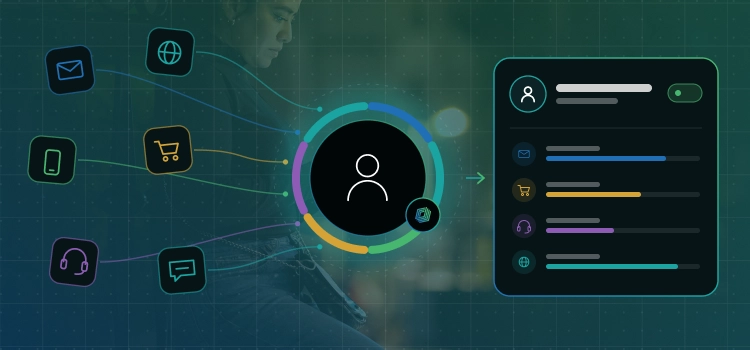
AI strengthens relationship management the same way people do: by learning. By combining behavioral data with emotional context, AI can create a fuller picture of a customer’s needs, preferences, and motivations. When integrated within a customer service AI agent, like Uniphore’s Real-Time Guidance Agent, this capability can help agents build relationships that drive customer lifetime value. Do certain customers expect friendly follow-up communications? Do others want fewer emails or calls? Emotion AI can help you deliver the empathetic service each customer expects—at scale.
Strengthening the four domains of emotional intelligence
Customers, clients, and buyers want it all: digital convenience with human emotional intelligence. However, for most businesses, balancing the two is often easier said than done. That’s where emotion AI comes into play. Whether helping remote sellers “read the room” or creating more empathetic customer service interactions, AI can level the playing field for enterprise employees—but only when it’s integrated within a business’ broader AI platform.
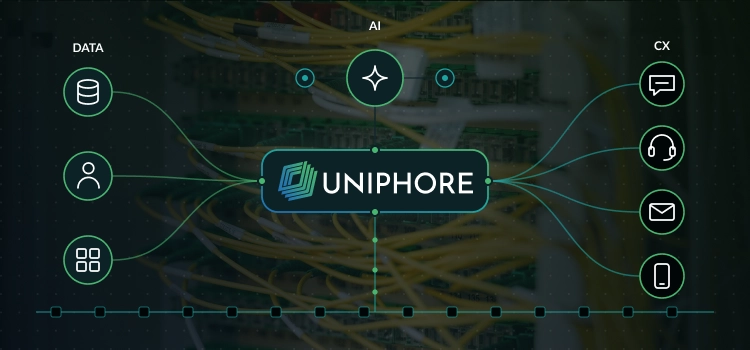
Uniphore’s business AI platform enables enterprise users to incorporate our pioneering emotion AI technology into countless AI applications and agents. Whether deploying pre-built solutions for customer service, sales, and recruiting or building agents for custom use cases, our composable platform empowers businesses to start realizing the value of AI—including its ability to strengthen emotional intelligence—immediately.
Learn more about emotion AI for the enterprise
Want to learn how you can deliver empathy at scale? Talk with our AI solution experts today.